The working copy
What has changed since your last commit, and the two things Innesta says about each change.
The working copy is everything that is different between the files on your disk
and your last commit. Innesta lists it as soon as you open a repository, and
keeps the list current while you work — editing a file in another application
updates it within a moment, with no refresh.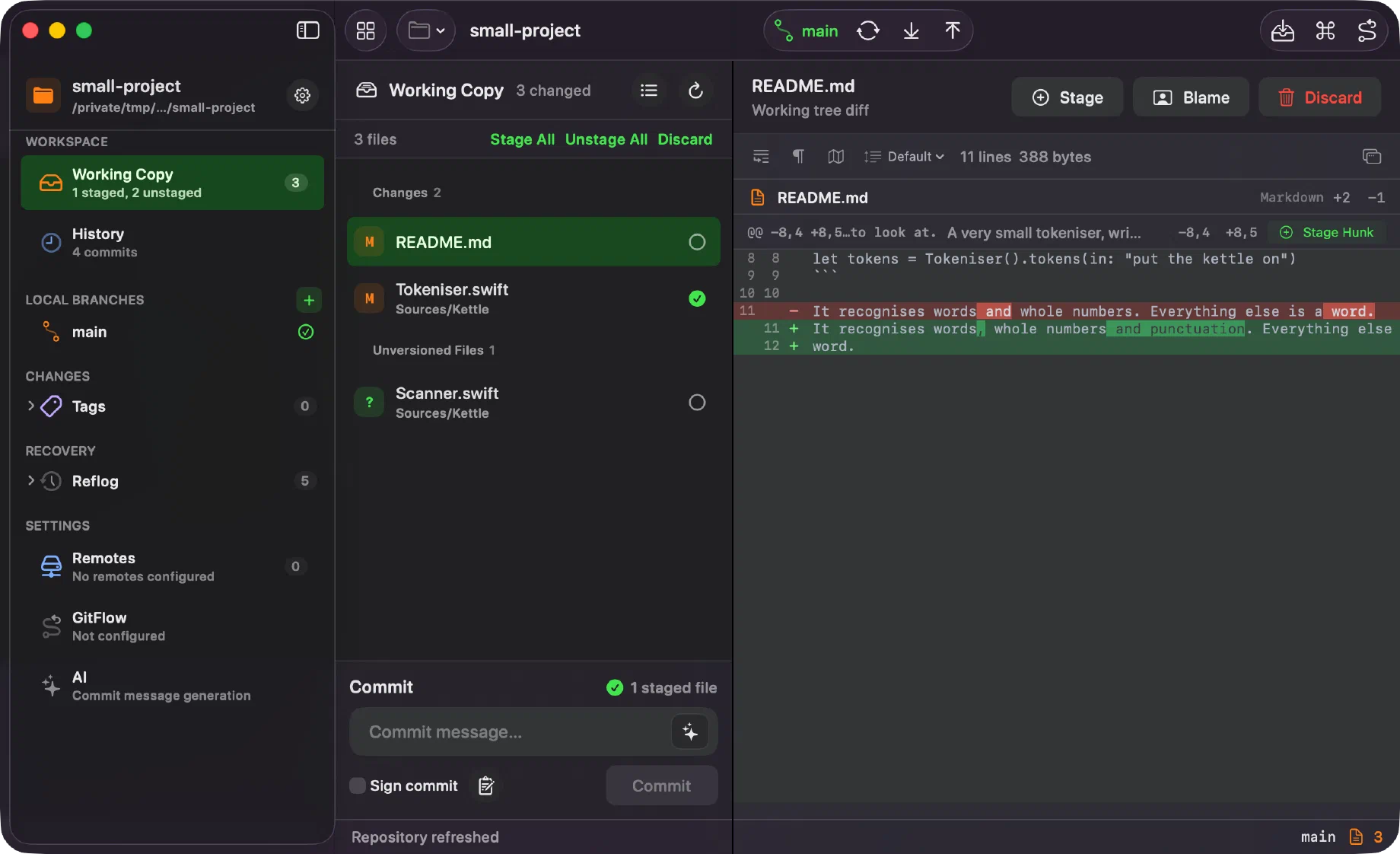
The states a file can be in
Innesta distinguishes added, modified, removed, renamed, copied, untracked and conflicted files, and marks each row with which it is. Two of those come up constantly:
- Modified — the file is tracked and you have changed it.
- Untracked — the file exists but Git has never seen it. The list has two groups, Changes and Unversioned Files, and these are the second of them, because they behave differently: nothing is recorded about them at all, so there is no “before” to compare against. The headings appear only when there is something in both.
Whether a change is staged — whether you have told Git it belongs in the next commit — is a separate question, and it has a mark of its own at the other end of the row. A file is modified and staged, not one or the other, and if you have edited it again since staging it, part of it is staged and part is not. Both marks are keyed in Colours and symbols.
That mixture is common and easy to misread, so Innesta gives those files an
All / Unstaged / Staged selector. It is rendered against HEAD, which
means a change keeps its position in the diff while you switch between the
three views instead of jumping about as the comparison changes.
Listing by status or by folder
The list can be flat — grouped by what happened to each file — or a folder tree. View ▸ Working Copy Files ▸ Grouped by Status and View ▸ Working Copy Files ▸ Folder Hierarchy switch between them, as does the layout menu above the list.
The folder tree earns its place on a large change: each folder shows how many files under it have changed, and the whole folder can be staged, unstaged, stashed or discarded in one action.
Refreshing
Innesta watches the repository and refreshes itself. Watching pauses while the window is inactive, hidden, minimised or covered, and resumes with a single refresh when you come back — so a repository that changed a great deal while you were elsewhere costs one update rather than hundreds.
Repository ▸ Refresh (⌘R) forces one, which is occasionally useful after something outside the app has rewritten history.